Clean or Contaminated?
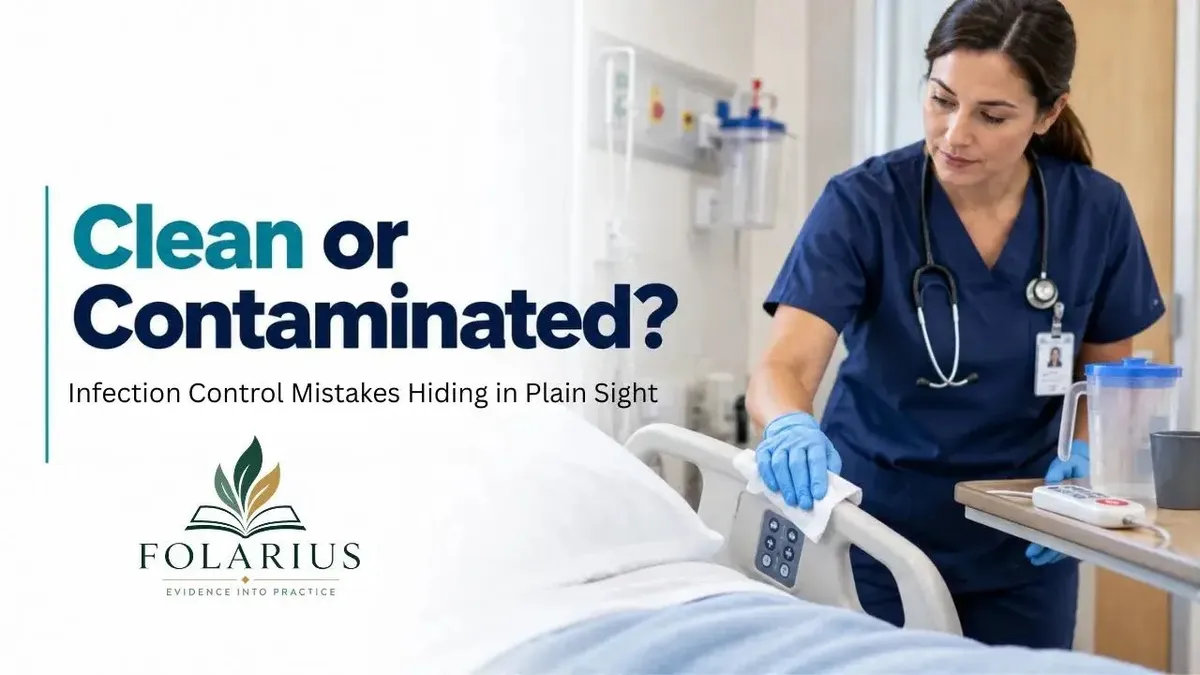
Your gloved hand just touched a patient’s bed rail. Next, you reach for a shared pen.
Should you treat the pen as clean or potentially contaminated?
[Clean] [Potentially Contaminated]
Before an answer is chosen:
Pick one. These are the everyday decisions this course challenges you to make.
After “Potentially Contaminated”:
Correct. Gloves that touch high-touch surfaces may transfer microorganisms to other objects. The pen should be treated as potentially contaminated if touched with those gloves. This course helps you recognize and interrupt these contamination pathways.
After “Clean”:
Not quite. A bed rail may harbor microorganisms, and gloves can transfer them to a shared pen. The safer approach is to recognize the potential contamination risk and interrupt the pathway.
Self-paced | On demand | 1.0 contact hour | $9.99
Who This Course Is For
Nurses who want to sharpen their clinical judgment and strengthen infection prevention practices during everyday patient care.
Audience: LPNs/LVNs and RNs, including nurses working in long-term care and other healthcare settings
Format: Asynchronous, self-paced, on demand
Contact hours: 1.0
Price: $9.99
Small decisions, big risks.
Infection prevention involves countless decisions made throughout everyday nursing care. Some of the most significant risks are the ones hiding in plain sight.
This practical, scenario-based continuing education course takes you beyond recognizing contamination. You'll examine everyday clinical practices, uncover overlooked risks, and apply evidence-based strategies to prevent cross-contamination.
Through realistic nursing scenarios, you'll strengthen your ability to identify unsafe practices, evaluate clinical decisions, and select safer approaches that protect patients and healthcare personnel.
What You'll Learn
Spot the hidden risks: Identify contamination risks during routine nursing activities.
Find what gets missed: Recognize overlooked high-touch surfaces, shared equipment, and potential contamination pathways.
Question common habits: Evaluate everyday infection prevention practices and distinguish safer approaches from potentially unsafe ones.
Break the chain: Apply evidence-based infection prevention strategies to reduce cross-contamination during patient care.
About Folarius
Folarius Consulting LLC provides evidence-based continuing education and infection prevention and control training for nurses and healthcare teams, with a particular focus on long-term care and resident-care settings.
Our mission is to bridge the gap between knowing infection prevention principles and applying them consistently in everyday clinical practice.
Folarius is led by a nurse educator holding MPH, MS, BSN, RN, and CIC credentials, with professional experience spanning long-term care nursing, hospital nursing, infection prevention and control, public health, and education.
Folarius Consulting LLC is a Florida Board of Nursing–approved continuing education provider (#50-64724).
Continuing education requirements vary by state and license type. Please confirm that this course meets your licensing requirements before registering.
Learn more at folarius.com
Make the next call with confidence.
Everyday decisions can make a difference in infection prevention.
Strengthen your clinical judgment, recognize overlooked risks, and put evidence-based prevention strategies into practice.
Learn on your schedule, at your own pace.
54 State Street, Suite 804 #17016
Albany, NY 12207